
Threshing Floor: May 2026

🙦 We’re always bumping up against the invisible walls of invisible social circuits, and possible streams of thought, possible scenarios, and then suddenly you find yourself thrust in, accepted into a new secret world, a new fishbowl conversation to look out from within. Who knows how many hundreds of them are right nearby me, stupid or glorious. Who around me should I be pulling into my life? What if I get a new friend connected to that key hill for all of us to fight alongside one another and die on?
Poems: Duck — Max Gildner; The Duckling — Vegas Harmon; The Duck Poem Pt. 1 — Evan Schultz; Duck Blind — Joffre Swait
Stories: Yes I Have Got Grapes Thank You Very Much — Van Fletcher; Duck Attack — Fyodor; Trax Laserforce — Simeon Landis; The Feryfli and the Deth-Er Duck — Ethan Plante
Essays: The Small Assassin: Insights into Individualists’ Arguments for Abortion — Ava Boyd; Liberty of Conscience Does Not Equal the Bill of Rights — Brian Marr; On the Merits of Being A Hog — Grace Roberts
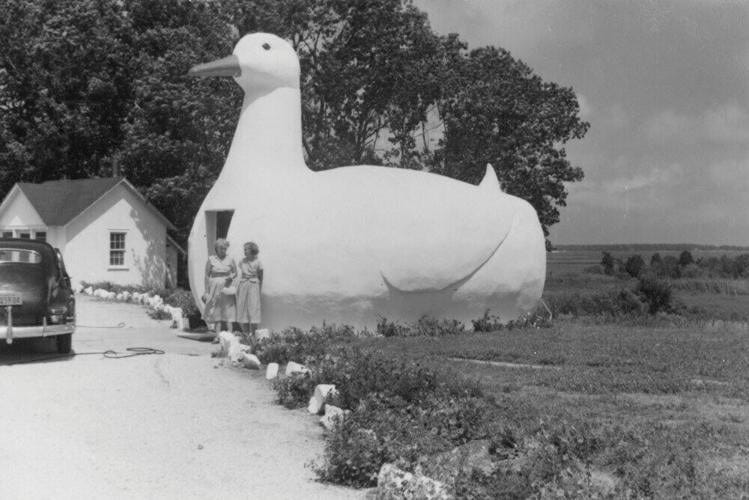
🙧 Poems 🙦
Duck
Splash
Splish
Quack
Honk
Flap
Flip
Cute
Duck
Taste good on a platter with taters too.
Thank you.
Max Gildner
The Duckling
is
  helpless
    a feathered marshmallow

mother
  a fresh red highway stripe

outside
  nose hairs bristle

look
  a frozen dumpling
    just baking in the belly
    of the tabby next door
Vegas Harmon
The Duck Poem Part 1.
Antanaephobia - the fear that somewhere, somehow a duck is watching you

I have always feared a duck
No one ever believes in luck
But by a duck, I’ve been accosted
Just my luck to be held hostage
By an evil, evil duck

One day back in hot mid summer
When I have finally finally been drawn under
I lost my job, my house, my wife
Everything sucks, but so goes life
Everything about it was a bummer

As I wandered, sad, unwary
Through the woods by the ferry
I stopped to watch the ducks swim by
Tossing bread and heaving a sigh
Until a duck came to me quite merry

Imagine my shock, my horror, my fear
When the duck spoke, and told me ‘come near’
I almost turned to run away
But found that I just had to stay
For the duck had offered me a beer.

I sat on a log to have a chat
With the talking duck who had
Somehow beer in great supply
He was really a pretty cool guy
Until I realized the he was bad

I was nearly drunk of my rocker
When he whacked me with his bonker
Knocking me into deep slumber
As I slept, he pulled me under
‘Neath a bridge to his hidden bunker

He tied me to a rocking chair
Threatened me with an evil glare
And then began to tell his plan
While I strained and sought to ran
Away from his beady black stare

“My name is Zorgoth, I come from afar
A beast you’ve summoned from inside your car
When you beep your horn in morse code
“Beep beep beeeeep beep beep,” - The code
Those you summoned me with this evil blare

“What in the world does that even mean”
I asked in terror clearly seen
“It means ‘Come terror, destroyer of earth
Come conquer, come pillage, in terror and mirth’
Thus you summoned the monster that is me”

“So I have come, as I have been asked
And all ducks will come to my banner to bask
In the final conquest of this earth so lush
To bring down the judgment in a mighty rush
Of ducks with guns and swords and axe,”

I suddenly managed to free the binds
As it happens, ducks can’t tie
I overthrew that evil fowl
Ran away with a howl
And managed to leave that terror far behind

But still I live in fear of that fight
And in bed I lie awake at night
Afraid that somewhere, somehow, waiting
Ready to strike and deeply hating
A duck that has me in his sight.
Evan Schultz
Duck Blind
                                        Bright
                            Salamanders,
Water celery, tadpoles, barley
                      He seeks as prey.
                                 He swallows the snail entire,                   escargot!
                                              Unless blinded you will never see
                                              Whence swoopèd to quiet alight he.
                                               But hearing wingbeat’s spray
                                                          You will turn, gripping
                                                            Brown Bess, birdshot:
                                                                          Quack!
                                                                          Quack!
Joffre Swait
🙧 Stories 🙦
Yes I Have Got Grapes Thank You Very Much
I did it. I gave some grapes to a duck. No, he didn’t ask, and no, I wasn’t selling any lemonade. I did, however, have glue—but that’s unrelated. Well I decided to just give a stupid duck some stupid grapes to stuff his stupid face and show all the stupid world that they are stupid. But it turns out,
I’m the stupid one.
So, it turns out, ducks can’t eat grapes. Grapes aren’t toxic to ducks or anything, it’s just that ducks can’t do it. They physically can not eat a grape. My whole project turned out to be way more time consuming than I had thought it was going to be. First off, ducks are really hard to catch. You’d think they’re pretty dumb, judging by their dumb little beady black eyes, their dumb U-shaped beak, and their dumb little webbed feet, but even if they are dumb, they’re also really fast. Oh, and mean. They are also very mean. I actually know a few people who have been assaulted by ducks, and it wasn’t pretty, but I’m sure you’ll hear about that from them. Anyway, I was not assaulted by a duck. I assaulted a duck. With grapes. And that turns out to have been a really stupid idea.
Anyway, when I finally caught the duck, I pulled some glue out of my pocket, quickly realized my mistake, and took out the grapes from my other pocket, many of which were squashed, but a few were still whole so I offered them to the duck within my grasp, but the duck did not want any of my grapes because he was angry that I had grabbed him, and started quacking at me really loudly, and then an old lady sitting by with a shopping bag full of bread started shouting at me for attacking a duck that she was probably getting ready to feed which is stupid—didn’t she know that bread is harmful to ducks?
So as the lady was yelling and attracting a crowd with her antics, and as the duck was quacking in my face, I took advantage of the duck’s open bill and shoved a grape down his throat, laughing triumphantly at my victory. Nobody else seemed impressed and the duck just stood there open mouthed, shocked at what had just happened to him. I was breathing hard, still high on victory, and shouted in perfect Latin, “SIC SEMPER ANATIS!”
I was still revelling in my triumph when I heard a strange wheezing sound. I quickly looked over at the old lady, but she was still shouting at me and had even gathered quite the platoon of geriatric park goers to berate me with senile accusations like “Duck killer!” and “Animal abuser!” Which is, of course, stupid. Then the wheezing came again and I looked down to see the duck with his bill still wide open, staring at me, beady eyes as wide as they could go. He let out another wheeze and bobbed his head forward at me. I determined this to mean that the he had had a change of heart, so I pushed another grape down his throat. After this his mouth was still open, so I was reaching into my pocket for yet another grape, when all of a sudden the duck collapsed right there on the grass. I looked down at his motionless body, then back up at the angry old people, quickly shoving the grape back into my pocket. I stood there for a moment, trying to decide the best course of action. “Oops.” I said, and then somebody threw a baguette at me. I ran away.
Now I’m afraid to leave my house. PETA keeps sending me threatening letters, and there are also letters with no writing, just several angry, webbed footprints. Now I can’t shake the feeling that somewhere, somehow, a duck is watching me.
Van Fletcher
Duck Attack
It was a beautiful, mild spring day. The surface of the lake glittered with the sun’s glare. A small army of ducks was paddling peacefully ‘round the pond. They played in the shallows, splashing each other. I sat at a picnic table a little ways off. Every few moments, I looked up from my book to gaze upon the glorious waterfowl.
Around 12:14 I began to get hungry, so I pulled a can of corn out of my pocket and popped the lid open. Fortunately, I had remembered a spoon this time. I tried to read and eat at the same time, but it’s difficult to turn a page with one’s nose, so I decided to take a much-needed break and stare at the ducks instead.
A few of them had waddled up out of the water at this point, and were staring at me with their dark brown duck eyes, cocking their heads and wagging their little duck tales. A few of the bolder ducks continued waddling toward me.
“You hungry?” I asked, spewing corn as I spoke. There were no other people around, so it was fine. One of the ducks did take a step back, however, so I apologized, then swallowed, then spoke again, (after having taken another bite.) “Here, come get some.” I tilted the can and shook some corn onto the ground.
The boldest of the ducks waddled over at full-speed (surprisingly fast, actually) and poked a kernel of corn with his beak.
“Yeah, go ahead,” I said.
He looked up at me, sun glinting off his green head. He wagged his tail and lifted his wings, and out from under his wings shot two, tiny, human-esque arms, with which he began grabbing corn and shoveling it wildly into his beak.
I screamed, spewing more corn. The duck looked up at me again, reaching his little arms out, fingers splayed. He quacked.
I screamed again, turned around, and began to run full-speed (surprisingly slowly, actually.) I glanced back and saw that, to my horror, the duck was gaining on me. Not only this, but others had begun to chase as well. I imagined I could feel their clammy little hands around my ankles…Except, I wasn’t imagining it.
In a moment I was on the ground, screaming. I felt feathers brushing my face, and small hands tightening around my throat. The sound of quacking overwhelmed my senses.
Fyodor
Trax Laserforce
Trax Laserforce flew for the USA for twenty years. Then, after his first retirement, his career truly blossomed and he went into operations. He optimized every possible system, from the food purchases for the commander’s pet gremlins, to the development of the Benzo-Krodokill pills that the pilots used to stay awake duking long missions, to the stockpiling of synthetic-panther-blood fuel (SPB-25) which powered the largest jets of the airforce. Trax was organization. Trax was efficiency. Trax never got married.
After he retired from his position as head of operations, he taught the young pilots. He thinned out the heard. For about fifteen years if you wanted to become a pilot you had to put your butt in a seat in Trax’s classroom. Trax didn’t smoke unless he was drunk. Trax didn’t drink until there was no work left to do. Trax didn’t own anything accept what he needed to survive. His only sentimental possessions were his mother’s old reading glasses, and his father’s old bible.
Trax only retired from teaching the young pilots after his seventh heart attack. He would collapse at the whiteboard, in the midst of a tactical-formation-diagram, and one of the students would rush up and shove the AED under his shirt feeling for a lump or vein to give away the heart, and he would spend a few days in the hospital, and then return. The higher-ups eventually took notice. By the time they got him to retire all the “higher-ups” were really much younger and greener than Trax, and he muttered audible insults about their inexperience to anyone who would listen.
With no family, no house, no job, and incredibly unstable health, Trax ended up in the Beverly Hills retirement home. Beverly Hills of South Carolina. Not LA. It was a very nice retirement home. Some of the staff could pretend they cared about him almost in the way family might. Trax haunted the halls of the home everyday, waking up early like a piece of surveillance software designed by NASA to keep the orbital war machines flying around the earth, focused on their targets.
Eventually he became bored. He had no mission. He found himself squinting at his father’s bible for hours, unable to make out any of the words through his old eyes. He tried to use his mother’s spectacles but they were no match for his eyes.
This is when I began to visit Trax. I visited everyone in the home. Each week a vacancy would come up and they would bring in a new tenant and I would learn a new name. They had about a hundred tenants, and I usually got to visit the person for couple years before they vacated. Trax stuck around.
One day I sat at his bedside and listened to him tell stories about the young pilots he trained. He could talk about the idiots he kicked out of the school for hours. Then halfway through a story he stopped, and turned to look at me,
“Boy? Do you have any daughters?” I was surprised by the total change of thought,
“No sir. I’m young. I’m not married yet. I have no children.”
“Hmm,” he said, and looked away, “I never taught any girls in the airforce.”
“Why do you ask?”
“I think… I think that girls might be good at some things… They might actually have a solution to… the problem.”
It was not like Trax to divert his focus from the mission like this. But he quickly recovered and began talking about fighter formations again. I kept visiting him. Another year went by. He didn’t mention anything about “girls” or “the problem” again. It was exactly what I wanted to see. A good soldier. A perfect old specimen, patriotic and true. I met with my advisors. The decision had to be green-lit by the men at the very top. Eventually I got a letter with written consent. I was given a bottle of tincture. The appointed day arrived. I went into the room of Trax Laserforce. He had a small geranium on his windowsill, with a little pink bow around it, and the mark of the diocese of St Maries convent dangling from the ribbon. It was a small deviation, well within operating procedure.
Trax was asleep. I took out the bottle and dropped the tincture in his mouth. For a moment nothing happened and I listed to the hum of the air conditioner in his window. I put another drop in his mouth and poked it down with my finger. Then he coughed and sat up. It must be working. He was wide eyed.
“AAAAAHHH,” he yelled. I looked deep in his eyes for some sign that it was working. “What is happening to me?” he asked.
“Trax.” I put my had on his shoulder. “The US government has selected you as a test subject for the immortal super soldier formula.” His mouth hung open. Then I saw a small beam of light come out of his chest. His muscles began to swell. I leaned in close to his ear,
“Trax, I’ve turned you into a god.”
Trax said nothing, but he began to grow. He blasted up through the roof of the retirement home. I ran from his room with my hands over my head, out into the courtyard. We anticipated incredible growth, but this was beyond any of the predictions. Luckily I thought ahead and brought a mega phone with me. Trax now towered over the dreary lawns and gardens of the home, at eight-hundred feet tall. I pulled out the mega phone.
“Trax can you hear me!!” His head tilted down. Crystal blue laser beam equipped eyes. He was perfect. For a moment I was elated, thinking about the promotions I would receive.
“I can hear you,” he said. Now all I had to do was swear him into service.
“Trax! You are the first immortal super soldier of the USA will you serve this country with your uh… life… I mean… forever?” Trax looked at me for a long time.
“Hmmm…” he said, “Hmmm…” This was not the ideal first response, but I plowed on.
“Trax! Will you repot to the supreme leader of our country and no one else??” He looked down at me for thirty seconds before responding.
“No… No… With my new powers… I will first…” He held up one finger. “Incinerate every retirement home in America.” I felt my stomach drop. “And then!” He held up a second finger. “I’m going to get married!”
Simeon Landis
The Feryfli and the Deth-Er Duck
A Fairy-Story Allegory
                                                                 For My Mother.
I. The Wishings of the Butterfly

The butterfly partakes a happy part,
Golden, not as metal but the sun
At daybreak, rising as a child’s heart.
With orange wings she flies with flutt’ring fun:
yet light and mildly she flew along
leaving sparkling trails like a song.
As gem-like coral glistens with a wink,
Creation wakes refreshed to see her hue;
and fish regard each water-drop anew.
Her misty trail’s a wishful, wistful train:
For even holy days are pierced by pain.

Her name was Feryfli, her favorite place the purple-flowered garden in the back of where a young boy lived. She often rested on the kiki plant, which was a pretty purple flower, and the young boy saw delicate creatures oft alight upon to rest their wings.

And so he sings his jolly grati-tune.
“butterfly, flutter by
with a mistful wish for me
share the star-light in the sky,
and show their melody!”

Her wings made a kind of silent music.
A melody was given to the boy,
though too high-pitched for any man to hear.
Its rhythms were the flutt’rings of the wing,
they measured out not hours but othering,
nor gems, nor bells, but like a distant chime,
like fairy-dust in crystal glass, past time:
the universal rhythms and their rhyme.

II. The Deth Er Duck

A shadow moved across the lawn,
the garden, and the pool.
The neighbors shook as if with chills.
or thieves before the rule.
 The shadow hobbled as it were,
and landed near a fly.
The fly froze in the air and fell,
twitch-leg his last good-bye.

The butterfly of faeryland
was flying for her life.
The cursed creature’s shadow-wing
a cold that followed by.

Her wings became heavy.
Flying felt like swimming through the air.
And the seconds passed in slow motion.
It struck her, as if the shadow had a wing.
Or swatting thing.
The day was cold;
The afternoon was dark.
Ants marched along on the ground, moving, collecting, making crafting trails.
A bee flew by, above the butterfly.
It saw the golden wing, gold not like metal but the setting sun:
grabbing pollen from the flowers above, it rushed away.
Men in white coats looked over the fence,
and some were on the roof:
hunters they all seemed, of solid build.
One jumped up the wall all made of brick,
started dancing on one leg,
and spraying something acid in the air.
Another on the other roof set up a satellite.
He held within his hand as well a box with blue-ish light.
His equipment pointed at the rosebush and the butterfly.
Within the kiddie pool, a man in camouflage stood out of sight.
The one with satellite heard static on his signal, and through it what sounded like quacking. He furrowed his brow and lowered his lip, gadget in hand. He pressed a button that gave a low static sound and held a walkie-talkie to his mouth: “it walks like it.”
A man behind the wall sat down with his back against it, opening up a wooden box.
“Go,” he said.
A dragonfly came out. It held a tiny stalk in its mouth. It flew here and there, darting and holding its place in the air, then darting again. It dropped the stalk above the pool.
The plant turned to ash.
A net from below the water scooped it up.
A moment passed. A bubbling voice said, “it talks like it.”
A sniper was slowly raised out of the water. It had a night vision lens, and showed movement around the butterfly.
“Gentlemen,” a man said,
“The hunt from hell is on.”

III. The Surging of the Duck

SURGE. The only word, I think that can describe the way the creature moved. Darkness and shade came around, and when it surged, the shadows hung around.
Insects died, and fruit would rot,
Leaves would wither up all shriveling beneath the surging wings of DethEr Duck.
The priests were watched. They wore open-fronted robes with white collars underneath their shirts. Shadows of the curse here wouldn’t touch them, not today. Only the weak, for reasons yet unknown, the duck had flown to injure and to take.
*chh*
“Bann is here.”
The white-coat warsmen waited.
A man with calm scowl—his face a meeting place betwixt the samurai, scholar, and the monk, whose zen was not without a thoughtful brow or sober gaze.
He stepped upon the stage.
Comms.
Walkie-talkie
static chirped.
He looked ahead.
“Let the seer’s eyes
Bewitch the prey;
Let the creature shed its darkened guise,
and lie open here
His words more than equipment now revealed.
Beastly-sizèd duck concealed.
The duck was of a darker black than garbage-grease,
than guilty blood could stain,
or ink that severed friendships,
lying words upon a screen that slandered
legends, lords, and love, and God above.
Its blackness was of no pigment,
but of a pig spent in pagan sacrifice,
after rushing into the sea,
to which it was driven by a king
who had authority to put a million demons into swine.
The Excisor he was named,
the Doomful Dane.
Within his sleeves he held the means
to banish beast and man.
Precise in wrist, and flourish draw:
he so exposed his wrist.
Small swords and spears there drawn in ink,
like steel, glistened in sun.

One he took, selecting it with care among the rest:
and there it grew into a proper spear,
and with a sniper’s and a billiard-master’s eye,
he pointed toward the butterfly.
With one quick strike, he struck
the curse-born duck
in the heart.
It had no heart.
He struck it in the eyes, arms pulling back,
the very wood of the blade bent
and pulled and sliced of a thick and darkened wing.
It fell to the ground, collapsing into chaff and mist.
The ants all walked around it.

The beast itself now bellowed like a bear,
then shrill-ly shrieked, like one would hear
when bone-starved coyotes find your cat,
who shrieks her final cry.
The duck, they thought, would die.
The butterly, all sore of wing,
was only lightly cut by roses’ thorns:
Until the beast in shrieking spread its ink.
A drop of it hit outer wing
before the beast burned up in flame.

If you have ever felt a baseball whizz past your head from behind, or even a bird or beetle rushing by, you might not the chill the huntsmen felt. Their coats, all white, now turned gray with despair—though not yet black, they knew they’d not repair the damaged wing. They slowly let, one by one. Even the Excisor now set his saddened hat back on his head.

The plants weakened, as if months of watering were not given them. The reeds which once grew by the pool were bruised. The food in the house became tasteless, colorless, as if abused with chemistry experiments.

For all was spent. Not like life of many years, but like roadkill, or a broken pot. Or a crystal slipper under rocks.

A hole was in one wing from the thorns.

IV. The End

A home with love grows greater much within, for it figures forth the world wherein All who abide shine like the stars.

It’s not too far.

The duck bellowed and howled in darkness...

A shadow passed by overhead. The shadow thickened, as if obsidian were drawn magnetically out of the air itself, or some layer far beyond the air—panning for cursed gems with insects’ nets.

Shards of the shade of the dying of the duck had hit the wings of the butterfly.

None of the white-coats could see it.

Many days later, the backyard was empty and the butterfly flew swiftly—only, she could not fly very far. Her wings felt heavier and, though the thorns had pierced the edge of one, she could still move fast. But today was different. A shade, a cold shade, as if crystal painted black had been set above the world. So Saturnine. Those who had worn white-coats appeared again—their garments turned to gray. And some in black spoke in low voices. Butterflies visited, too—of blue and yellow, orange and of white. But they flew lightly in, and slowly when they left. The gray-coat men departed now, and the one in black, looking at the butterfly, said softly, “Some call it the Crystal Chrysalis.”

That shadow of crystal closed in every day, like a huge net that covered the sky. Feryfli traveled slowly, but though her wings sparkled now with golden dust, the orb would not depart from her.

The young boy saw that her movement slowed. He laid down on his belly and looked at her. He didn’t want to disturb her much, but he figured that he ought to say good-night. He named her Ma-Mi, since she reminded him of someone he loved.
“Ma-Mi, you’re so beautiful,” he said, and gently kissed her on the head.

He went to bed.

Slowly the Noble wiped his cheeks and eyes; walking gently to the telephone pole, he descended downward as a spiral staircase made of wood had appeared around it. The crickets chirped, the light was low; I nothing saw except the golden glow of Noble-Man.

He reached the butterfly and lightly set down something small beside it. Then he reached up to his head and, kneeling, set his crown down in front of him. The butterfly waved her wings once more, and then was still. A small sparkle of light rose above it, which the Noble gently caught in both his hands. The butterfly glowed gold and crystalline. The darkened shrapnel fell off and faded, in place of the wound where the thorn had pierced there was a name, woven white with light, and no one knows it save the two of them.

The Noble Player walked forward, each step leaving behind a glist’ning mist. He had walked down steps that nobody could see, and gently lifting off his crown, I saw small twinkling lights on top of it. He looked at me, and then I knew that all these tiny lights were butterflies of variegated hue. The butterfly now folded up her wings and let him lift her up into the crown. Many other colored butterflies, which cannot be seen with human eyes, were present there. A small perch was for her there, that looked like a throne made of gold, shaped after the plants she used to love. Her wings now glowed with gold, like dew reflecting well the rising sun. She fluttered them, still holding to the crown, and they made music harmonizing with the rest. I blinked my crying eyes and saw the stars, and then a woman in a bed. Her hair was short and gray, and curling too.
Ethan Plante
🙧 Essays 🙦
The Small Assassin: Insights into Individualists’ Arguments for Abortion (even when the fetus is a person)
I had the strange experience of reading Judith Jarvis-Thomson’s paper A Defense of Abortion with a baby inside me kicking me. He jostled around in my belly while I read metaphor after metaphor of how a baby is an intruder, gently tipping my laptop up and down with his tiny feet. Thomson says unless I grant him certain rights, it’s proper to expel him from my body. Very strange indeed. Her goal in the paper is to prove that abortion is permissible, even granting that the fetus is a person. This is obviously a distressing thing to commit to print, but understanding her argument and her surrounding assumptions is important if we truly want to engage in the fight for the unborn.
Thomson takes on an expressive individualist philosophy, the moral ethics of Immanuel Kant, but post-modernized, the current flavor of philosophy brought to you by the great cultural zeitgeist. This moral code worships autonomy; as long as your action is not affecting someone else’ s autonomy, it’s ethical. The lowest level of this philosophy ran rampant at my public high school in Seattle: “It doesn’t affect you that I’m gay, so why does it matter? Just let people do their own thing! (If it does affect you, you’re a bigot, and bigots should be burned btw).” Kant, in his epistemology, places the mind at the center of everything, this directly translates into his ethics. The self is the first thing you can know. You are an unattached human will. The boundary for knowing (what he calls the phenomenal realm) is around the mind. Taken to the extreme, this philosophy completely disregards obligations put on us by nature. It views nature as raw material for us to mold, and natural relationships as secondary at best, unless we actively decide to engage in them.
As Christians, the first thing we are is ‘created.’ Notice in Genesis 2:7 “man became a living creature,” not “man became a living independent being.” We are by nature relational; creatures created by the Creator. I think of John Donne’s observation: “No man is an island.” Even if we have no one else in our lives, we are still living in relation to God. In Acts 17 we see “In Him, we live and move and have our being.” We see this directly mirrored in the parent-child relationship. You can’t choose your parents, and you grow up completely dependent upon them. This is an imposed, logically unchangeable relationship. The first thing you are is a child of your parents, existing in your mother’s womb.
Dependency causes problems for the expressive individualist. Everyone experiences a lack of real autonomy at the very beginning of their lives. According to the individualist, if you can’t will things for yourself, you have no personhood, because the first thing you are is an unattached reasonable will. This is why it’s ultimately difficult for some to grant that the fetus is a human. As Christians, we obviously deny this when we consider Acts 17; we all are dependent on God for our entire life, including our reason and will. God is the only truly independent being, and we in relation, are dependent beings. We care for the dependent, because we are ultimately dependent on God. Even in this, our mindset cannot not even be “I am, by my mercy, allowing my child to live” it’s “this is my child, and I am his mother.”
Thomson, working from an expressive individualist framework, completely disregards these necessary relationships and as a result, conceives of a situation where a mother and a baby in her womb could be perfect strangers. She severs this mother-child relationship, as if nature could permit this at all. Her basic argument is that if you did not consent, you did not will this child into existence, he is an intruder. If you grant him life even if you did not choose for him to exist, you are going above and beyond your moral obligations. You are the “Good Samaritan” to allow him to stay.
When painting a picture of her opposition, she often uses the phrase “a right to life.” This is a common phrase used by pro-lifers, saying that the baby has just as much of a “right to life” as the mother, and thus should not be killed. Thomson calls this phrase ‘problematic,’ and I agree. This is a weak argument, as it still works in this individualist Kantian framework. As creatures, to speak of rights is funny. Adam sinned against God, and our race deserves death. It is by Grace that we live, not by what our perceived ‘rights’ are. We live and move and have our being only because God gives that to us as a common grace. Instead of arguing from a baby’s right to live, we need to argue that it is wrong to deny the child life from God, to sever this natural parent-child relationship.
Ray Bradbury in his potentially humorous short story “The Small Assassin” describes a conversation between two new parents. The wife’s irrational reaction to her own son, though exasperated, I feel is the ultimate end of Judith Jarvis-Thomson’s conclusion:
“Oh, Dave, once it was just you and me. We protected each other, and now we protect the baby, but get no protection from it. Do you understand? Lying in the hospital I had time to think a lot of things. The world is evil--”
“Is it?”
“Yes. It is. But laws protect us from it. And when there aren’t laws, then love does the protecting. You’re protected from my hurting you, by my love. You’re vulnerable to me, of all people, but love shields you. I feel no fear of you, because love cushions all your irritations, unnatural instincts, hatreds and immaturities. But--what about the baby? It’s too young to know love, or a law of love, or anything, until we teach it. And in the meantime be vulnerable to it.”
This semi-ridiculous story perhaps deals with secret insecurities in the post-modern individualist. The characters don’t believe in the natural and obligatory parent-child relationship and are thus vulnerable to a thing with a will of its own, which could potentially have evil intentions.
“Vulnerable to a baby?” He held her away and laughed gently.
“Does a baby know the difference between right and wrong?” she asked. “No. But it’ll learn.”
“But a baby is so new, so amoral, so conscience-free.” She stopped. Her arms dropped from him and she turned swiftly. “That noise? What was it?”
Babies are not aliens, and the procreative process is perhaps one of the most potent expressions of the natural order, as well as God’s grace towards us. Our culture’s resistance to children is a result of a long-standing tradition of nature-defying worship of self and opposition to God. Christians have an obligation to search their own belief system for any suggestion of individualism, and this includes our tried and true arguments against abortion.
Ava Boyd
Liberty of Conscience Does Not Equal the Bill of Rights
Previously, I tried to offer different definitions of liberalism and explained how I was opposed to four out of five of them.
Here I want to address some traditional aspects of liberalism that are typically taken to flow from freedom of conscience, but are actually more complicated.
I said that I am in favor of freedom of conscience, and I framed this as something that the middle ages and early reformers did not have as clear a grasp on. When you look at the torture and execution of heretics, I agree with modern thinkers that a grave violation of human dignity took place.
But this modern instinct did not come out of nowhere; it was the result of Protestant theology. Martin Luther rediscovered the wonderful truth that faith is something that only God can give and that no man can force another to have.
Because Protestants recognized the importance of free, uncoerced faith ended up also valuing uncoerced opinion. To force someone to believe at the edge of a sword is wrong; by extension, forcing someone to affirm a statement of faith or face the rack also came to be seen as wrong.
Now, the problem is that just because you allow someone liberty of conscience does not mean that this entails other liberties. While historically Protestantism did give birth to America, which eventually enshrined the liberties of freedom of religion, freedom of speech, and freedom of assembly into its national order, this was not the only option on the table.
For instance, Protestants were often fine with state churches ruled over by national governments, and they were fine with forcing the citizens to go to church. This was because Protestants distinguished between invisible faith and visible conduct, and while they were fine with leaving the conscience alone, that did not mean that every man could do what was right in his own eyes.
Whatever liberty of conscience means it cannot mean that any individual who feels something is against his conscience has the right to disobey. For instance, a man may want to escape conscription, but if the nation allows enough of this, then it will have no men left to defend the nation and thus fall to another nation.
So for instance, while it might not be right to force a Muslim to go to church, this does not mean Christians must always allow him to build a mosque. Perhaps nations should tolerate Catholics, but that does not mean they should not swear an oath to the monarch. Americans are accustomed to thinking of the right to vote as something that everyone should be entitled to do. But it may be prudent to restrict the right to vote to a small minority in order to preserve the nation’s culture.
In short, the rights that Americans have often claimed were universal are actually something peculiar to our nation, because of its strong Protestant heritage. Freedom of conscience is a good thing, but this does not mean that the Constitution should be adopted in all times and places.
It is a unique and good thing about America, and perhaps it can only be preserved if Protestant Christianity survives.
Brian Marr
On the Merits of Being A Hog
I walked with a friend one day. Walked in the pleasant way of two friends in a small town, headed we knew not where. And as we walked we came upon a wildling alleyway. A fair feast, stumbled upon in the lateness of harvest. A feast of wild apples, and plums… powder blue, and heavy clusters of grapes, fallen to the ground.
And so, we ambled down that wildling alleyway.
Oh, such a plucking of pears and tasting of half ripe plums as transpired there… Such a bliss of sticky hands and sun borne headache… the soft headache of a perfect day with a lovely friend.
And the california poppies quietly witnessed our two cups overflowing.
———
When I find you, my love, I hope that I will find you like a cluster of grapes growing in the wildling alley. A pleasant and unexpected harvest. Unsought, abundant, and overflowing. Oh I know how little I deserve you. But I have never deserved anything… From the salvation of my soul to the plums in the alleyway, all is unmerited delight. I know how ashamed I ought to feel… but can you blame me if I am, instead, overflowing with joy? For who hath resisted his will? Not I. I am too weak. From the salvation to the delight I am greedy of it all.
And will you be, also?
My love, I hope I will find you as the grapes have found me, a joyous traveler, and one who has found an equally pleasant and unexpected harvest. I hope we will be joined together at the feast, and in our dusty highway clothes, compelled to rejoice.
What will the California poppies say then, when our two cups, overflowing, mingle in the joy of grace received. I suppose they will say nothing, only nod their golden heads in silent approbation as mercy drops of wedding wine water the dusty ground. For who would dare lay anything to the charge of God’s elect?
Grace Roberts
🙦 I love my boss so much.